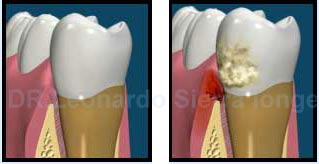
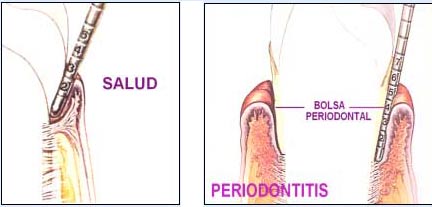
Advanced periodontitis causes the same type of damage as moderate periodontitis, though more severe. Bone loss is more pronounced and can cause severe shifting of the teeth and even tooth loss. The gum may have deep spaces between them and the teeth (periodontal pockets). There are some cases where acute, painful absceses are present. Bad breath is more pronounced and difficult to cure at this point. Commonly, some teeth or in some cases even all teeth have to be removed.
Periodontics or Periodontology is the branch of dentistry which studies supporting structures of teeth, diseases and conditions that affect them. The, supporting tissues are known as the periodontum which includes the gingiva (gums), alveolar bone, cementum, and the periodontal ligament (fibers). The word comes from the Greek words peri meaning around and odons meaning tooth. Literally taken, it means study of that which is "around the tooth

The most common affection of the periodontum is Periodontal Disease
Periodontal Disease
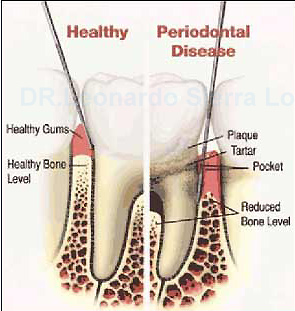
Periodontal disease is a chronicle bacterial infection which destroys the gum and supporting bone that hold teeth; these bacteria can affect one tooth or many teeth.

Moderate Periodontitis is a progression of early periodontitis, and includes the same symptoms as well as some new ones: Periodontal pockets can develop in the gums, causing either bulging or receding gums. They can be filled with pus and bleed easily. In addition, more severe bone loss occurs at this stage. Due to the bone loss and connective tissue breakdown, teeth can begin to shift or become loose.
It is important to notice that periodontal disease is considered a “silent” disease. This means that in most cases the patient is unaware of having this problem because there is no pain or discomfort, especially in early stages.
Causes and disease development
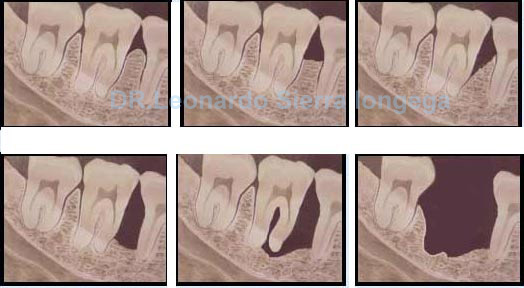
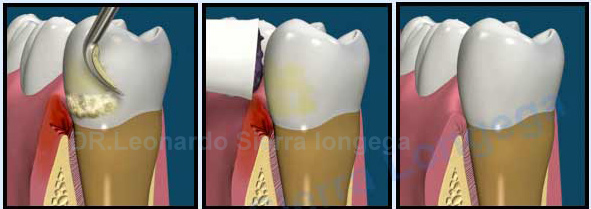
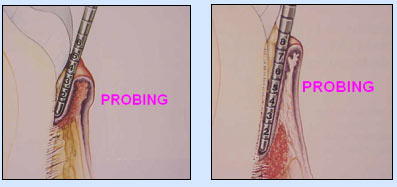
The presence of bacteria and their products (toxins) next to the gum tissue causes it to swell (edema), to become dark red, and to bleed. The next step is the loss of the seal between the gum and the teeth, provoking the formation of periodontal pockets (a space between gums and teeth colonized by bacteria). All this is associated with loss of the alveolar bone (bone surrounding the teeth) and dental mobility. The severity of periodontitis depends on the pocket depth, bone loss and dental mobility levels.
There are different risk factors involved in developing periodontitis, some of which can be reduced significantly by making changes in your lifestyle choices.
Periodontitis responsible for systemic diseases
On the other hand Periodontitis can be responsible for some systemic diseases,
Answering questions about periodontal Disease
Gingivitis is very common; the average of this problem varies depending on geographic region and types of population. In general we can say that the prevalence (percentage of cases in a moment) can reflect more than 80% in children and 40% in adults. Regarding Periodontitis is hard to say because it depends on many factors, but there are several studies that reflect that Periodontitis can be present in more than 50% in adults more than 40 years old; advanced severe-destructive periodontitis is present in about 1 to 4% of the population.
No. Neither chronic gingivitis nor periodontitis are contagious. Although there are reports of bacterial transmission from one person to another, other factors would be necessary to produce gingivitis. No hygiene and presence of bacteria for several days is the main requirement to produce gingivitis and patient’s susceptibility is necessary for the onset of periodontitis.
We can say that Gingivitis is reversible. A good oral hygiene technique that eliminates the presence of bacterial plaque will produce immediate improvement of the inflamed gums; it will change to normal features (pink, firm and no bleeding) in just a few days. Three times a day (or at least twice) of brushing and flossing is enough to have successful results. Professional cleaning is very important because that is the only way to remove calculus and get a smooth surface by means of scaling and dental polishing. This smooth dental surface is easy to clean and promotes gum health.
lPeriodontitis can be cured, but it is not reversible. Although there are many successful regenerative procedures, you cannot have again the same conditions that exist in health.
The treatment consists of three stages: the first is the same treatment as for gingivitis, the second stage consists in corrective procedures in order to eliminate periodontal pockets and obtain new attachment between gum and teeth; there are also several kinds of regenerative procedures (bone grafts) that can be done in order to regenerate some of the bone that has been lost. The third stage includes some monitoring appointments in order to maintain periodontal health, very commonly dental hypersensitivity can be present and is treated on this stage. We consider a patient healthy when he has no gum inflammation, when he has no discomfort and when we find a space with a depth less than 3 mm between gum and teeth.
It takes two to four weeks to control gingivitis completely. The treatment of periodontitis takes between two to four months depending on the case severity.
Gingivitis is just the beginning of periodontal disease, we can say that it is just the mildest form of this problem; many people that do not treat gingivitis are going to progress into having periodontitis. The consequences of not treating periodontitis are bone loss, dental mobility and eventually tooth loss.
Gingivitis can start at a very early age, with temporary dentition from six to seven years of age, but is more common to observe it in puberty and adolescence. It is just necessary to have dental plaque constantly for several days. Gingivitis could be present all lifelong. Periodontitis normally appears in people between 30 to 40 years old.
There are several studies that show that the poorest populations have more Gingivitis and Periodontitis, and this fact is definitively related to levels of dental care education. The more information that children, adolescents and adults have, the less common periodontal disease is. More education makes this problem easier to prevent.
Any dentist has to be prepared to diagnose, treat and prevent gingivitis.
Periodontists treat periodontitis; they diagnose the kind of periodontal disease for each case, and apply the correct treatment.
You need to brush at least twice a day, but preferably more often, including after each meal, using an adequate technique recommended by the hygienist, dentist or periodontist. Flossing daily is a good way to get rid of bacteria along and just beneath the gum line, as well as between teeth. Professional cleanings are very important and it is strongly recommended to do these cleanings twice a year because they are very effective for reducing plaque and detecting gum disease early. They consist in tartar scaling and polishing of the teeth creating smooth surfaces that are easier to clean.

